
Whether you’re a designer, architect, or game developer seeking to recreate the ambiance of Edo-period Japan, high-quality traditional Japanese architecture blueprints are invaluable. Among the most historically and artistically significant sources is the Momijiyama Toshogu Shrine, once located inside Edo Castle—the heart of Tokugawa authority.This article introduces the shrine’s cultural and architectural background, links to authentic blueprint archives, and tips for incorporating these traditional Japanese architecture blueprints into modern creative workflows.
What Was Momijiyama Toshogu Shrine?
Momijiyama Toshogu Shrine was constructed in 1618 (Genna 4), within the western grounds of Edo Castle, to enshrine Tokugawa Ieyasu, the first shogun of the Tokugawa dynasty. The term “Toshogu” refers to shrines dedicated to Ieyasu, and while Nikko Toshogu is the most famous, Momijiyama Toshogu served as its counterpart in the capital.
Key facts:
- Location: Adjacent to the Ninomaru (secondary bailey) of Edo Castle.
- Function: An inner sanctum of the shogunate, used for monthly rituals by the reigning shogun, particularly on the 17th of each month.
- Historical Importance: Functioned as the most sacred site within the castle complex, symbolizing the divine authority of the shogun.
- After Meiji Restoration: The shrine was dismantled during the modernization of Tokyo, with religious duties transferred to shrines like Ueno Toshogu and Kunozan Toshogu.
These religious ceremonies and rituals performed by the shogun underscored the site’s elite spiritual and political status, making its traditional Japanese architecture blueprints critical for understanding Edo-period ceremonial architecture.
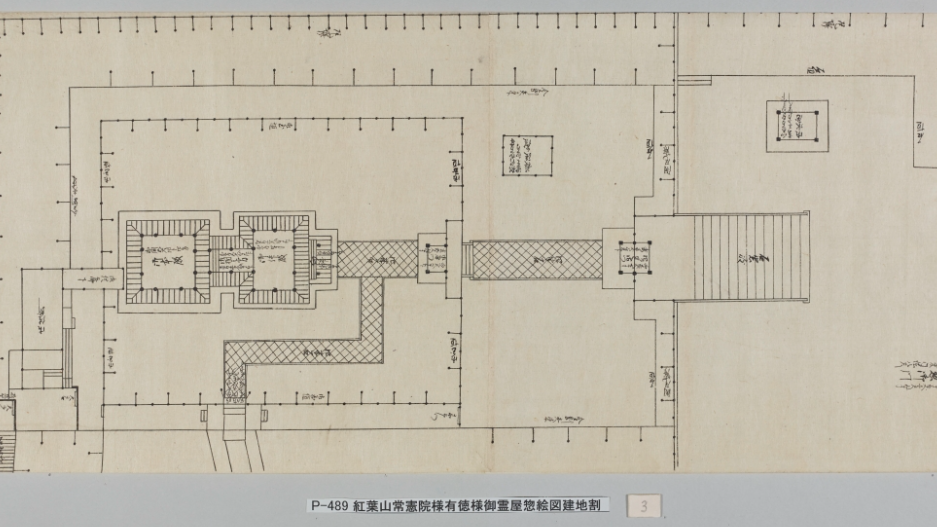
Architectural Features Seen in the Blueprints
The shrine featured “Gongen-zukuri” style architecture—a form that interconnects the main hall (honden), worship hall (haiden), and connecting passage (ishinoma) into a U-shaped layout. These traditional Japanese architecture blueprints reveal:
- Elaborate bracket complexes (tokyō) supporting the eaves,
- Sea cucumber-shaped tie beams (ebikō-rō) between structures,
- Symmetrical layouts based on standard Edo-period ken measurements (approximately 1.8 meters per ken),
- Fused religious and imperial motifs, such as phoenix carvings and gold-leaf ceilings.
Momijiyama Toshogu’s traditional Japanese architecture blueprints later influenced the construction of over 100 Toshogu shrines across Japan, demonstrating their architectural legacy.
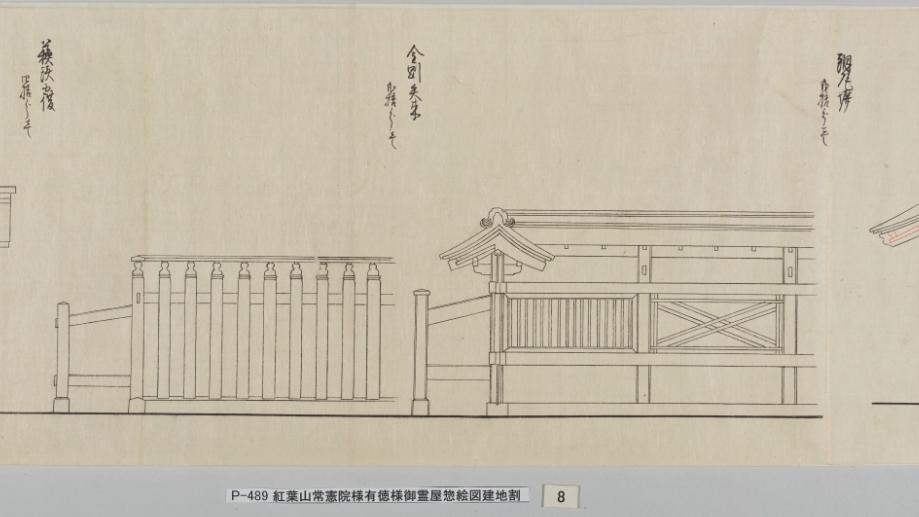
Where to Download the Blueprints
To deepen your understanding of Momijiyama Toshogu Shrine and its historical structures, here is a curated collection of downloadable illustrations and diagrams from trustworthy Japanese archives:
1. Elevation Drawings and Perspective Maps
These traditional architectural illustrations offer insights into the exterior design and symbolic layout of the shrine complex:
- “Momijiyama Gogu Jiwari”
A rare elevation drawing of the main Toshogu Shrine structure. View Image - “Momijiyama Joken-in-sama Yutoku-sama Goryoya Soezu Kenjiwari”
A detailed elevation map showing the sacred mausoleum structures. View Image - “Momijiyama Genyuuin-sama Chozubachi Stone”
A depiction of the stone basin used for ritual purification. View Image - “Momijiyama Taiyuuin-sama Fence and Omotemon Gate”
A precise drawing of the perimeter fence and heavy front gate. View Image
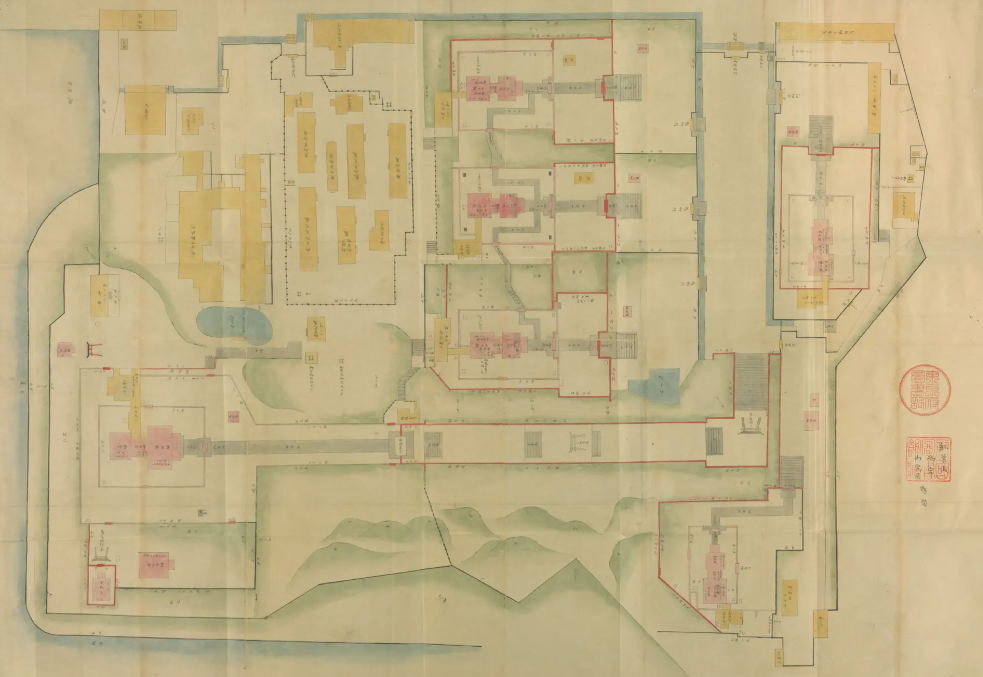
2. Site Layouts and Floor Plans
Although not all documents provide detailed floor plans, these historical maps convey the spatial organization and stylistic presentation typical of Edo-period blueprints:
- “Momijiyama-zu”
A general site map depicting the overall layout of the shrine complex. View Image - “Momijiyama Ezu” from the Tokugawa Reitenroku
A simplified floor plan rendered in layout map scale, offering a bird’s-eye overview. View Image - “Momijiyama Soezu”
A comprehensive layout drawing detailing the shrine’s various buildings. View Image - “Momijiyama Gogu Gosambutsuden no Zu”
A layout map rendered not in plan view but as a frontal perspective—common in traditional Japanese architectural maps, resembling a guidebook illustration. View Image
Additional blueprints and visual materials are available from the Tokyo Metropolitan Library’s digital archive, especially under the 49th Digital Showcase Collection: “The Last Days of Edo Castle – Views from Architectural Blueprints”
How to Use These Traditional Japanese Architecture Blueprints
Creative professionals can adapt these blueprints for:
- 3D Modelling: Import SVG-traced line drawings into Blender for historically accurate Edo-period shrines.
- Texture Mapping: Extract wood grain and decorative elements for PBR textures in game development.
- Architectural Study: Examine proportion systems and support techniques to compare with Western classical architecture.
These traditional Japanese architecture blueprints are not mere illustrations—they’re keys to decoding Edo-period spatial design and symbolism.
Let Edo’s Sacred Architecture Inspire Your Creations
Although the physical Momijiyama Toshogu Shrine no longer stands, its traditional Japanese architecture blueprints endure as a vivid record of Edo’s sacred heart. With these free downloads, creatives can now faithfully reconstruct, reimagine, or reinterpret this space—from digital worlds to educational exhibits.
Explore More Free Downloadable Resources
If you’re interested in discovering more freely downloadable historical Japanese art resources for your creative projects, click the banner below. Our curated collection includes additional ukiyo-e prints, kimono pattern books, and rare illustrated manuscripts that offer authentic glimpses into Japan’s artistic heritage. Continue your journey through the floating world and beyond with these carefully selected visual treasures from Japan’s golden age of woodblock printing.
