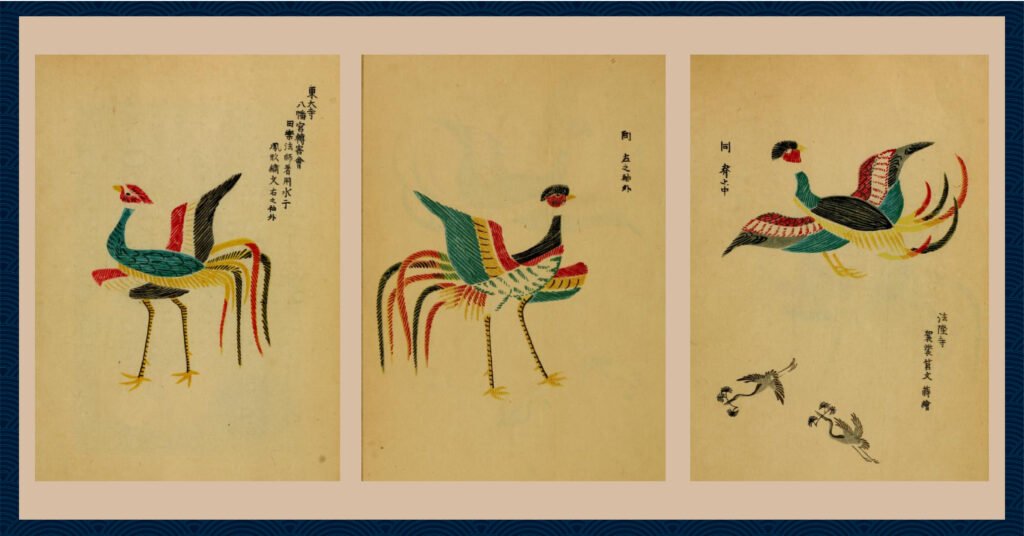
The serene atmosphere of Japan’s ancient temples emanates not only from their architectural grandeur but also from the exquisite decorative elements adorning them. Now, an invaluable Edo-period (1603-1868) design manual called “Yatsuo no Tsubaki” (Eight Hills Camellia), which meticulously documents traditional Japanese motifs from iconic temples like Todaiji and Horyuji, has been digitized and made freely available online. This remarkable resource offers contemporary creators unprecedented access to aesthetic principles refined over more than a millennium.
“Yatsuo no Tsubaki”: A Treasury of Traditional Japanese Motifs That Influenced Imperial Design
“Yatsuo no Tsubaki” is a comprehensive design collection compiled during the Edo period, though its exact publication date remains unclear. What we do know is that this catalog of traditional Japanese motifs attained such prestige that it was consulted during the design process for the Meiji Imperial Palace following the Meiji Restoration of 1868.
The manual begins with a preface by Murata Harukado, a notable Edo-period scholar of National Learning (Kokugaku) and disciple of the renowned scholar Motoori Norinaga, who authored the influential “Kojiki-den” (Commentary on the Ancient Chronicles). Harukado’s involvement suggests that “Yatsuo no Tsubaki” was conceived not merely as a pattern book but as a scholarly documentation of Japan’s aesthetic heritage.
For Western readers unfamiliar with Kokugaku, this intellectual movement focused on rediscovering Japanese cultural identity by studying ancient texts and traditions, often in contrast to Chinese influences. This context helps explain why the documentation of traditional Japanese motifs was considered intellectually significant beyond mere decorative applications.
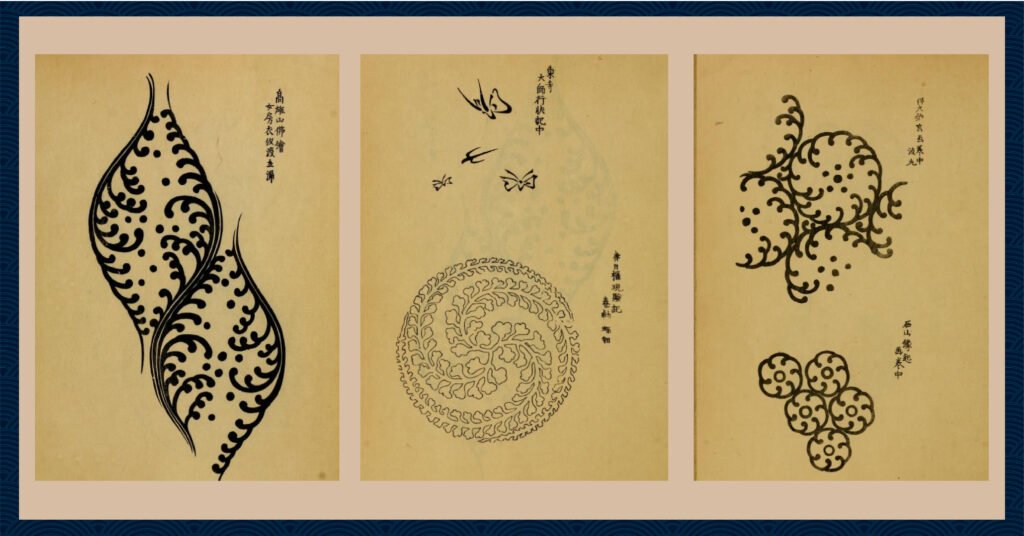
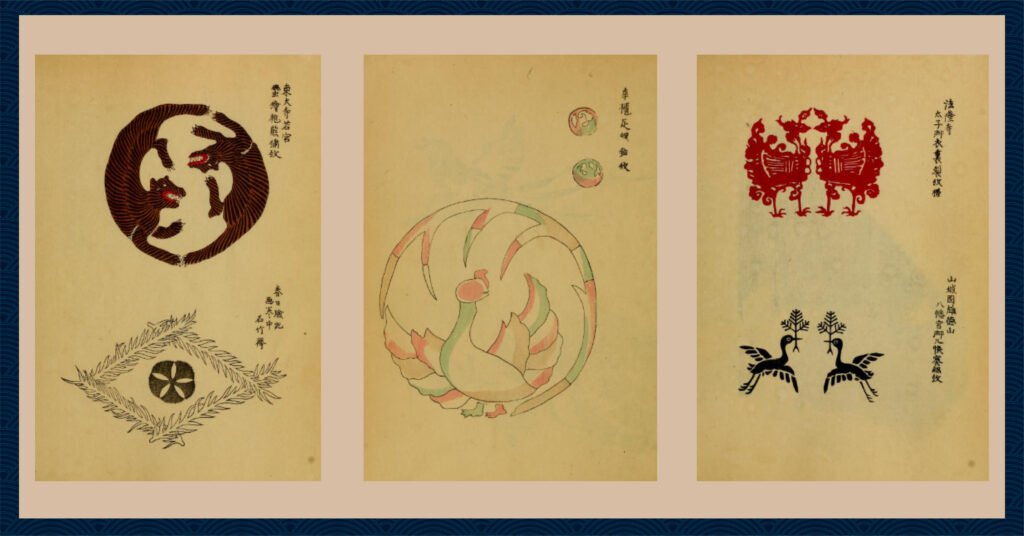
The traditional Japanese motifs featured in “Yatsuo no Tsubaki” primarily showcase bird and plant designs used in the architectural elements and treasured artifacts of Todaiji and Horyuji temples. Importantly, these patterns represent more than simple decoration—they embody ancient Japanese cosmology, views of nature, and Buddhist philosophy in visual form.
Todaiji and Horyuji: Sacred Repositories of Traditional Japanese Motifs
Understanding the temples that house these traditional Japanese motifs provides essential context for appreciating the significance of “Yatsuo no Tsubaki.”
Todaiji Temple, located in Nara City, was officially named Konkomyo-shitenno-gokoku-no-tera (Temple for the Protection of the Country by the Four Heavenly Kings of the Golden Light). Emperor Shomu commissioned its construction in the 8th century, sparing no expense. The temple’s main icon is the Great Buddha of Nara (Rushana Buddha). Originally, the temple complex featured the Great Buddha Hall (Daibutsuden) flanked by two seven-story pagodas estimated to have stood over 230 feet tall.
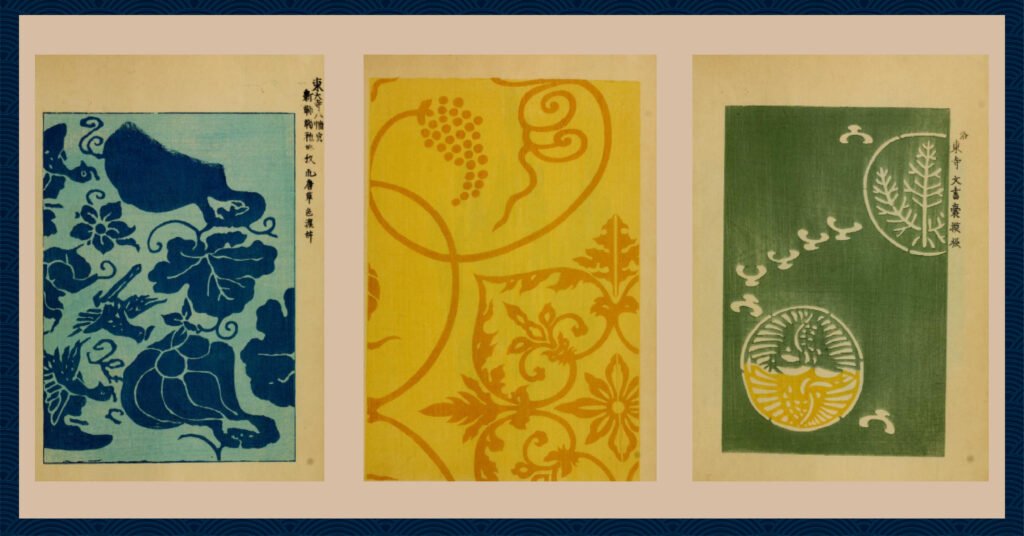
Although many structures were destroyed by warfare over the centuries, the surviving buildings—including the Great Buddha Hall rebuilt in 1709—were designated a UNESCO World Heritage Site in 1998 as part of the “Historic Monuments of Ancient Nara.” The traditional Japanese motifs employed at Todaiji include karakusa (arabesque), hōsōge (imaginary Buddhist flower), and honeysuckle patterns that arrived with Buddhism from China but were subsequently adapted to Japanese sensibilities.
Horyuji Temple, located in Ikaruga Town, Nara Prefecture, is associated with Prince Shotoku and was reportedly founded in 607 CE. It consists of two main areas: the Western Precinct centered around the Golden Hall and five-story pagoda, and the Eastern Precinct featuring the Dream Hall (Yumedono). The Western Precinct contains what is recognized as the world’s oldest surviving wooden building complex, designated a UNESCO World Heritage Site in 1993 as “Buddhist Monuments in the Horyuji Area.”
The traditional Japanese motifs at Horyuji are characterized by transitional styles from the Asuka period (592-710) to the early Nara period (710-794). These include distinctive “Asuka patterns” influenced by Chinese Southern and Northern Dynasties as well as Persian and Indian motifs—all meticulously documented in “Yatsuo no Tsubaki.”
Categories and Symbolism of Traditional Japanese Motifs
“Yatsuo no Tsubaki” catalogs various types of traditional Japanese motifs, each carrying specific meanings and symbolism:
- Plant Motifs
- Lotus (Renge-mon): Symbolizing purity and enlightenment in Buddhism. Just as the lotus produces beautiful flowers from muddy waters, Buddha’s teachings lead to enlightenment amid worldly impurity. This motif appears on the pedestal of Todaiji’s Great Buddha.
- Arabesque (Karakusa-mon): Depicting continuously flowing curving vines and leaves, symbolizing vitality and prosperity. These patterns frequently appear on ceilings and wall paintings at Horyuji’s Golden Hall.
- Honeysuckle (Nindo-mon): Stylized honeysuckle vines and flowers representing life force, commonly used in Horyuji’s architectural decoration.
- Animal Motifs
- Kalavinka (Karyobinga-mon): Mythical birds with human faces believed to explain Buddhist teachings with beautiful voices. As symbols of paradise, they appear on treasures at both Todaiji and Horyuji.
- Phoenix (Hoo-mon): Mythical birds from Chinese legend symbolizing peace and prosperity, frequently used in Horyuji’s architectural decoration and treasures.
- Dragon (Ryu-mon): Mythical creatures believed to control water and rain, featured in Todaiji’s Great Buddha Hall and Horyuji’s treasures.
- Geometric Motifs
- Seven Treasures (Shippo-mon): Overlapping circles symbolizing eternal prosperity and harmony, found in architectural decorations and Buddhist implements at both temples.
- Thunder (Rai-mon): Patterns of continuously angled lines symbolizing lightning and thunder, representing divine power.
- Hemp Leaf (Asanoha-mon): Geometric patterns based on hexagons, invoking the rapid growth of hemp plants to symbolize healthy development of children.
These traditional Japanese motifs transcend mere decoration to express cosmology, views of nature, and religious devotion. “Yatsuo no Tsubaki” preserves these patterns in detail, providing contemporary designers with invaluable insights into Japanese aesthetic principles.
Contemporary Value of Traditional Japanese Motifs
The traditional Japanese motifs documented in “Yatsuo no Tsubaki” offer more than historical significance—they provide profound inspiration for modern design, art, and architecture.
These patterns embody distinctively Japanese aesthetic principles like “the beauty of empty space” and “expression through line.” The technique of representing subjects using minimal lines and forms within limited spaces parallels contemporary minimalist design approaches. Similarly, the Japanese sensibility for stylizing natural objects into geometric patterns offers universal value applicable to modern pattern design.
Additionally, the symbolism and narrative qualities embedded in traditional Japanese motifs align with contemporary design methods emphasizing branding and visual storytelling. For instance, plant motifs symbolizing growth and prosperity could be adapted for corporate logos or brand identity development.
While “Yatsuo no Tsubaki” may not match the color richness of the contemporary “Kyukozu” design manual, its meticulous depiction of pattern details makes it an exceptionally valuable reference for form and structure. For today’s designers and illustrators, these traditional Japanese motifs provide not only creative inspiration but also deeper insight into Japanese cultural sensibilities.
Cultural Heritage Sharing in the Digital Age
Advances in internet technology have democratized access to cultural treasures once available only to scholars and specialists. The digitization of “Yatsuo no Tsubaki” exemplifies this trend, creating valuable opportunities to share the beauty and depth of traditional Japanese motifs with a global audience.
“Yatsuo no Tsubaki” is currently freely available through both the National Diet Library Digital Collections and the Internet Archive, with downloadable PDF options at both sites. This accessibility allows researchers, designers, students, and anyone interested in traditional Japanese motifs to study these patterns without temporal or spatial limitations.
The high-resolution scans enable detailed observation of pattern expressions, providing sufficient quality for research or creative purposes. The widespread digital availability of “Yatsuo no Tsubaki” holds tremendous significance for preserving and transmitting Japan’s cultural heritage.
Conclusion: Traditional Japanese Motifs Connecting Past and Future
The traditional Japanese motifs preserved in “Yatsuo no Tsubaki” are not merely historical artifacts but living expressions that continue to speak to contemporary audiences. The aesthetic sensibilities, views of nature, and cosmological perspectives embedded in these patterns maintain universal value transcending time and culture.
The journey of these traditional Japanese motifs—from Todaiji and Horyuji temples to the Edo-period design manual “Yatsuo no Tsubaki,” then influencing Meiji Imperial Palace decoration, and now being shared globally through digital archives—demonstrates the remarkable continuity and evolution of Japanese cultural traditions.
Through “Yatsuo no Tsubaki,” designers and artists worldwide can connect with aesthetic principles developed over centuries of Japanese creative expression. Whether you’re seeking authentic Japanese design elements for contemporary projects, researching historical pattern development, or simply appreciating the beauty of traditional design, this free resource offers invaluable insights into Japan’s visual cultural heritage.
For creative professionals navigating today’s digital design landscape, these traditional Japanese motifs provide timeless lessons in balance, symbolism, and visual harmony. Their enduring appeal reminds us that while technologies and techniques evolve, fundamental aesthetic principles remain remarkably consistent across centuries. By making these patterns freely available, cultural institutions ensure that traditional Japanese motifs continue to inspire new generations of creators worldwide.
Explore More Free Downloadable Resources
If you’re interested in discovering more freely downloadable historical Japanese art resources for your creative projects, click the banner below. Our curated collection includes additional ukiyo-e prints, kimono pattern books, and rare illustrated manuscripts that offer authentic glimpses into Japan’s artistic heritage. Continue your journey through the floating world and beyond with these carefully selected visual treasures from Japan’s golden age of woodblock printing.
