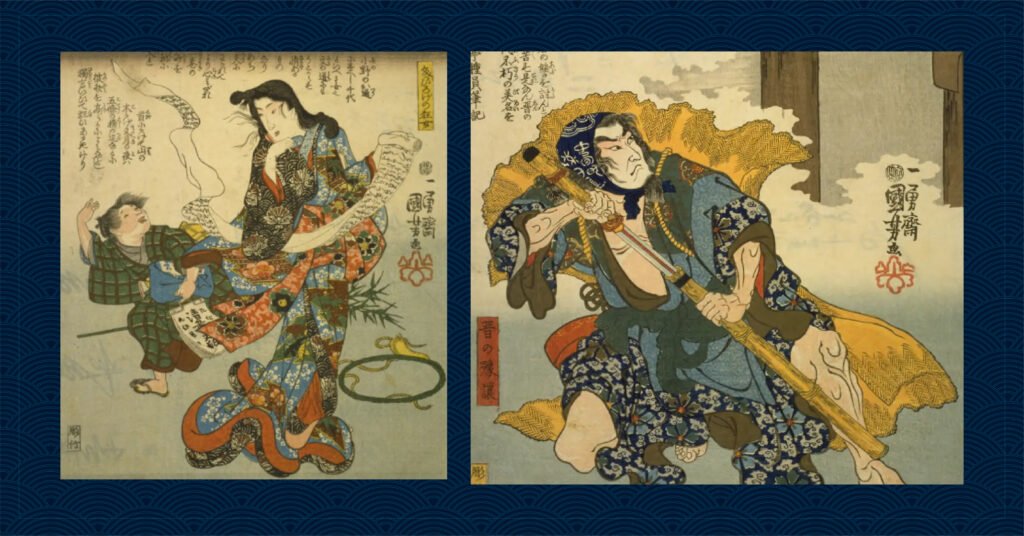
Discover the artistic essence of Japanese classical poetry through freely downloadable Hyakunin Isshu portrait collections – a treasure trove of visual inspiration that has shaped Japan’s aesthetic sensibility for centuries.
What is Hyakunin Isshu? The Immortal Anthology from the Kamakura Period
The Ogura Hyakunin Isshu (literally “One Hundred Poets, One Poem Each”) is a classical Japanese anthology compiled in the early 13th century by Fujiwara no Teika (1162-1241), the foremost poet and scholar of his time. This collection brings together 100 exquisite waka poems, each composed by a different poet spanning from the Asuka period (592-710) to the Kamakura period (1185-1333).
The Origins of the Collection
The Hyakunin Isshu has a fascinating origin story. The collection was commissioned by Utsunomiya Yoritsuna, an influential warrior in the Kamakura shogunate, who requested Fujiwara no Teika to create a poetry anthology to decorate the sliding doors (fusuma) of his villa at Mount Ogura in Kyoto’s Ukyō district. Teika meticulously selected one poem from each of 100 poets, referencing imperial anthologies such as the Kokinshū (Collection of Ancient and Modern Poetry) and the Shinkokinshū (New Collection of Ancient and Modern Poetry). This selection would later become known as the “Ogura Hyakunin Isshu.”
The Diverse Poets of Hyakunin Isshu
One of the most striking features of the Hyakunin Isshu is its diversity. The anthology includes poems by six emperors, from Emperor Tenji to Emperor Juntoku, as well as aristocrats, monks, and numerous female poets. The significant representation of women poets—including literary luminaries such as Sei Shōnagon, Izumi Shikibu, and Ono no Komachi—reflects the flourishing of women’s literature during the Heian period (794-1185). The inclusion of the warrior-poet Minamoto no Sanetomo also offers a glimpse into the social transformation taking place during the Kamakura period.
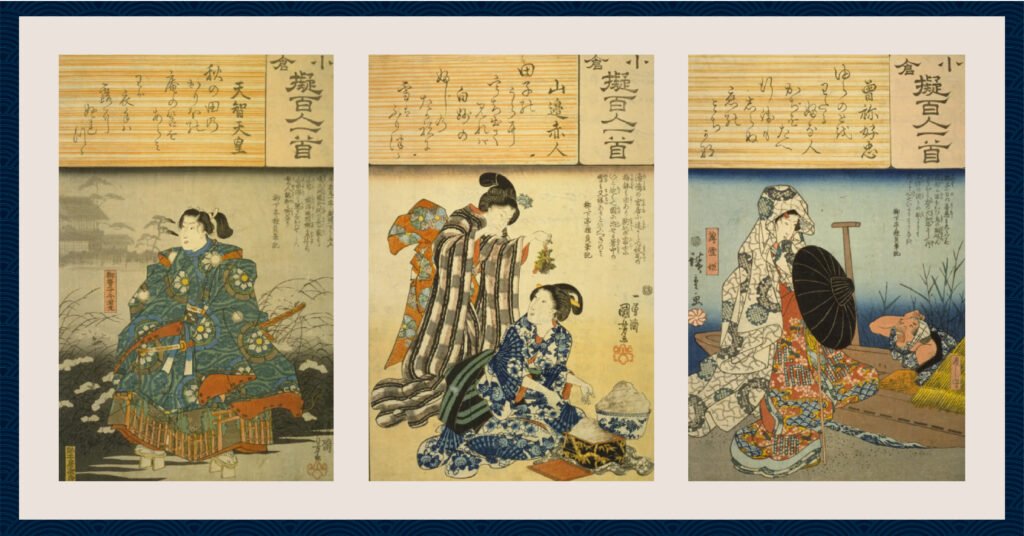
The Multifaceted Value of Hyakunin Isshu Portraits
The Hyakunin Isshu portraits that accompany these poems are not mere decorations but represent a unique fusion of Japanese poetry and visual art with profound significance:
Aesthetic Value – The Harmony of Poetry and Image
Hyakunin Isshu portraits (known as kasen-e in Japanese) visually interpret the poetic world, creating a unique aesthetic space where words and images resonate with each other. Particularly the portraits created by ukiyo-e artists during the Edo period (1603-1868) are rich in color and ornamentation, vividly reflecting the aesthetic sensibilities of their time. Every element—from the posture and expression of the poet to the surrounding scenery and furnishings—reveals a delicate artistic expression informed by the content of the poem and the poet’s historical persona.
Academic Value – A Repository of Historical Evidence
Hyakunin Isshu portraits serve as valuable resources for understanding the clothing, furnishings, and architectural styles of their era. The attire of the poets is meticulously differentiated according to their status and rank, making these images primary sources for studying costume culture from the Heian to Kamakura periods. Additionally, studying stylistic differences between artists and changes in depiction over time contributes to the elucidation of Japanese art history and publishing culture.
Educational Value – A Gateway to the Classics
Hyakunin Isshu portraits have traditionally played a crucial role in poetry education and as an introduction to classical literature. The integration of images with poetry makes the abstract world of waka more accessible and comprehensible. Particularly after the Edo period, when the Hyakunin Isshu became widely enjoyed as a card game (karuta), these portraits also took on the aspect of acquiring cultural knowledge through play.
Spiritual Value – The Inheritance of Aesthetic Consciousness
The Japanese aesthetic sensibilities expressed in Hyakunin Isshu portraits—concepts such as mono no aware (the pathos of things), wabi (rustic simplicity), sabi (appreciation of imperfection), and yūgen (profound grace)—represent the essence of Japanese culture. By appreciating these images, modern viewers can connect with the sensibilities of ancient people and experience the continuity of Japanese culture. The themes of the Hyakunin Isshu—the changing of seasons, romantic emotions, and the transience of life—continue to evoke universal empathy even in contemporary times.
Value as a Design Resource
In modern times, Hyakunin Isshu portraits serve as a wellspring of inspiration for various creative fields including graphic design, crafts, and fashion. The uniquely Japanese composition, color sensibility, and symbolic expression offer new possibilities for contemporary visual expression. As a bridge connecting tradition and innovation, the imagery of the Hyakunin Isshu continues to live on.
Historical Context of Hyakunin Isshu – Japan in a Period of Transformation
The early Kamakura period, when the Hyakunin Isshu was compiled, marks a major turning point in Japanese history. During this transition from aristocratic rule of the Heian period to the warrior government, old values intersected with the breath of a new era. Fujiwara no Teika himself may have had the intention of recognizing the value of classics in this wave of change and establishing a poetic standard to be passed down to future generations.
While the poems selected for the Hyakunin Isshu are strongly infused with the fragrance of Heian aristocratic culture at its height, they also contain many elements that would characterize later Japanese culture, such as a sense of impermanence and the aesthetics of wabi-sabi. In this sense, the Hyakunin Isshu can be said to symbolize a “turning point” in Japanese culture.
Free Downloadable Hyakunin Isshu Portrait Collections
Below are valuable resources where you can download Hyakunin Isshu portraits for free. These offer an excellent opportunity for researchers, designers, and creators to engage with traditional Japanese aesthetics.
National Diet Library Digital Collection “Azuma Nishikie Hyakunin Isshu”
The “Azuma Nishikie Hyakunin Isshu,” published in the late Edo period, is known as a masterpiece of kasen-e (poet portraits). All 202 images have been carefully scanned, including not only portraits of the poets but also scenic illustrations based on the content of the poems. Characterized by vibrant colors and delicate line drawings, these images convey the high level of ukiyo-e techniques of the time.
Note: Unfortunately, the bulk download function is not available, so please select individual images of interest and download them from the panel at the bottom right of the screen.
Library of Congress “Ogura Hyakunin Isshu Picture Book”
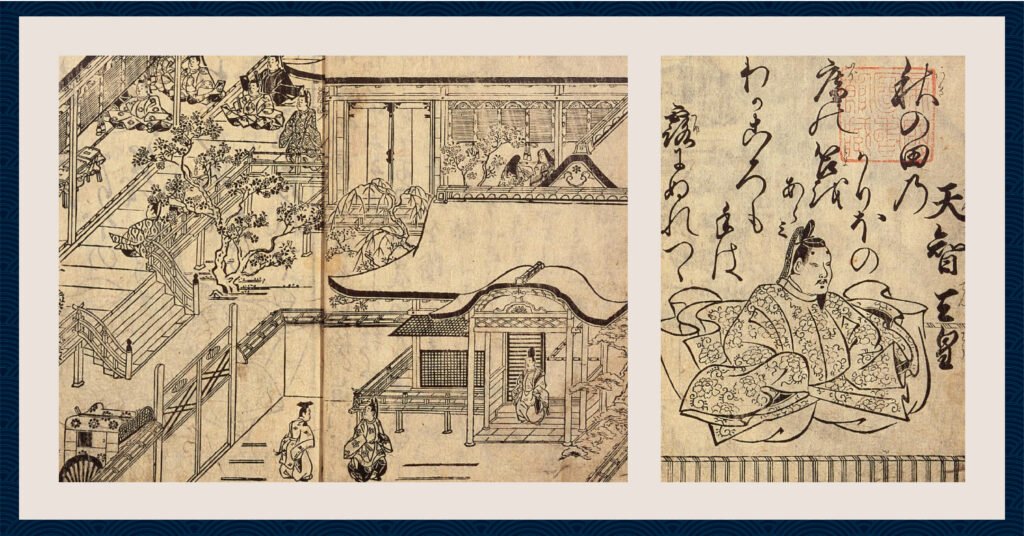
This is a 56-page picture book of the Ogura Hyakunin Isshu that can be downloaded in its entirety as a PDF. What’s particularly noteworthy is that these woodblock prints are attributed to Hishikawa Moronobu (c. 1618-1694), a master of early ukiyo-e. Moronobu is considered the founding father of ukiyo-e, and his **Hyakunin Isshu portraits** show pioneering expressions that influenced later ukiyo-e artists. Through these chronologically arranged portraits from Emperor Tenji to Emperor Juntoku, you can glimpse an important chapter in Japanese art history.
National Diet Library Digital Collection “Hyakunin Isshu” (written and illustrated by Kato Chikage)
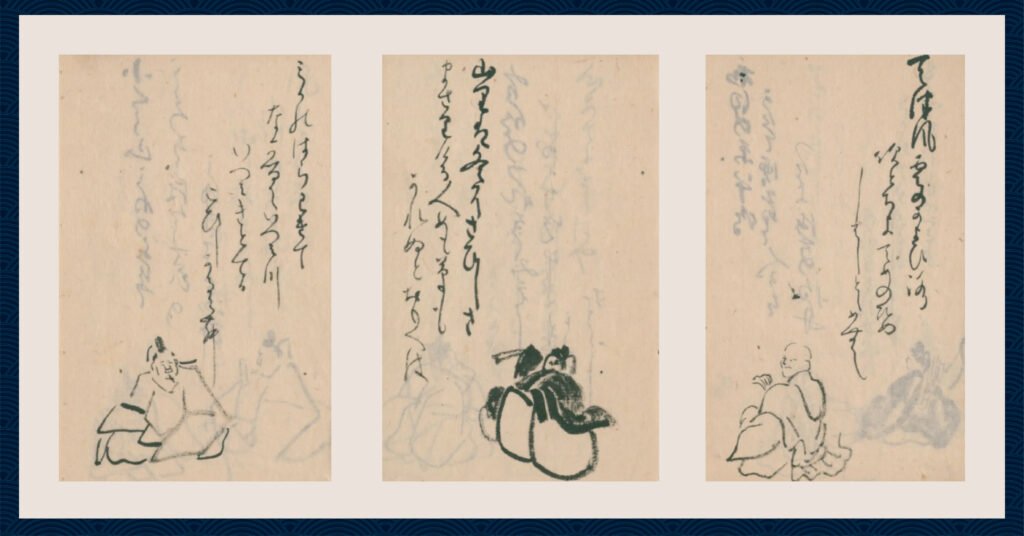
This “Hyakunin Isshu” was created by Kato Chikage (1735-1808), known as a scholar of Japanese classics and waka poetry. Unlike the other two collections, this one features charming illustrations drawn with a more accessible brush style. The entire volume can be downloaded from the panel at the bottom right of the screen. As Chikage was a disciple of the renowned scholar Motoori Norinaga and engaged in classical studies, his **Hyakunin Isshu portraits** reflect both scholarly foundation and delicate aesthetic sensibility.
The Enduring Appeal of Hyakunin Isshu in Modern Times
Since its widespread popularization during the Edo period, the Hyakunin Isshu has long been cherished as a foundation of Japanese cultural literacy. Even in modern times, as seen in the flourishing of competitive karuta and the popularity of the anime “Chihayafuru,” the appeal of the Hyakunin Isshu remains unfaded and continues to be passed down in new forms.
The scenes and figures depicted in Hyakunin Isshu portraits contain many elements that can be considered the origins of Japanese aesthetic sensibility. Seasonal nature descriptions, delicate emotional expressions, and the harmony of color and line—these illustrations, which condense the characteristics of Japanese beauty, can provide rich inspiration for contemporary design and art creation.
For Western audiences unfamiliar with karuta, it’s worth noting that competitive karuta is a traditional Japanese card game based on the Hyakunin Isshu. Players must quickly identify and grab the card containing the second half of a poem when the first half is read aloud. This game combines literary knowledge with sharp reflexes and has evolved into a serious competitive sport in Japan, complete with national championships.
The visual elements found in Hyakunin Isshu portraits—including the distinctive composition techniques, color schemes, symbolic motifs, and the representation of classical Japanese clothing and architecture—offer Western designers unique aesthetic principles that differ significantly from Western artistic traditions. These elements can be particularly valuable for those looking to incorporate authentic Japanese visual language into their work.
I hope that the free download resources introduced here will serve as a wellspring of creativity for Japanese culture researchers, designers, and all those interested in traditional Japanese aesthetics. The beauty and wisdom hidden in the Hyakunin Isshu portraits speak to us across the ages. By listening to their voices and incorporating them into contemporary expression, we can realize the rich inheritance and development of Japanese culture.
As you explore these Hyakunin Isshu portraits, you’ll discover not just historical artifacts, but living expressions of an aesthetic philosophy that continues to influence global design and art. Whether you’re seeking inspiration for a new project or simply appreciating the refined sensibilities of classical Japanese visual culture, these freely downloadable resources offer an authentic connection to one of the world’s most distinctive artistic traditions.
Explore More Free Downloadable Resources
If you’re interested in discovering more freely downloadable historical Japanese art resources for your creative projects, click the banner below. Our curated collection includes additional ukiyo-e prints, kimono pattern books, and rare illustrated manuscripts that offer authentic glimpses into Japan’s artistic heritage. Continue your journey through the floating world and beyond with these carefully selected visual treasures from Japan’s golden age of woodblock printing.
