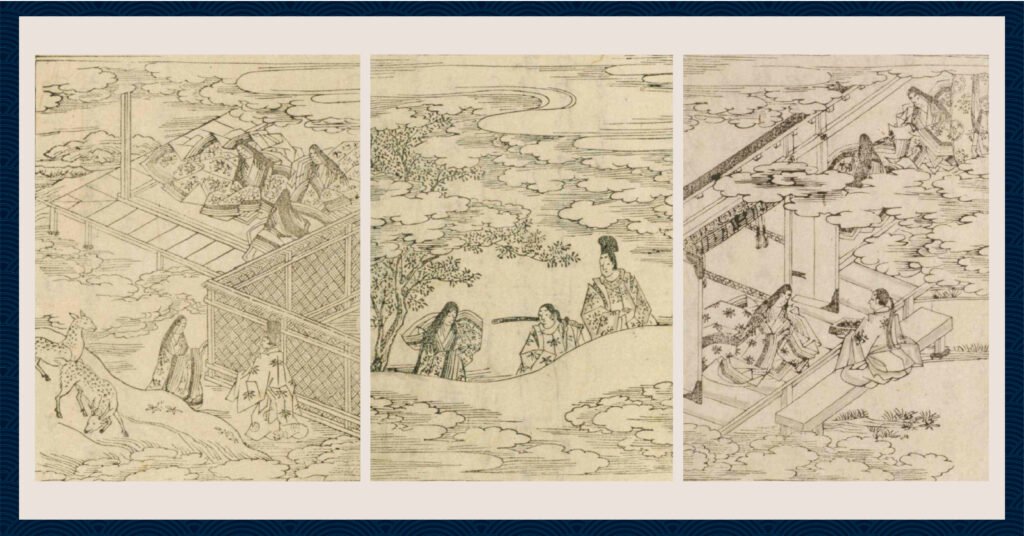
Explore the exquisite world of Japanese nobility culture through the digitized art scrolls of “The Tales of Ise” – a masterpiece of Japanese classical literature now freely available online from prestigious museums worldwide
The Origins of Japanese Prose Literature – The Formation and Value of “The Tales of Ise”
“The Tales of Ise” (Ise Monogatari) is a collection of poem tales believed to have been compiled in the early Heian period, around 900 CE, making it the oldest surviving collection of its kind in Japan. The 125 episodes, each famously beginning with the phrase “In olden times, there was a man,” masterfully depict the romantic adventures and life experiences of a protagonist modeled after the aristocrat Ariwara no Narihira, using a captivating blend of waka poetry and prose.
Interestingly, the protagonist is never explicitly named in the narrative. However, historical records in the “Nihon Sandai Jitsuroku” describe Ariwara no Narihira as having “elegant appearance and unrestrained demeanor” and note that “while lacking in scholarly talent, he excelled at composing Japanese poems.” These descriptions perfectly align with the character portrayed in The Tales of Ise.
As a foundational work of early Japanese prose literature alongside “The Tale of the Bamboo Cutter” (Taketori Monogatari), this collection profoundly influenced later masterpieces like “The Tale of Genji.” Far more than merely romantic stories, these tales represent a cultural heritage that vividly reflects the aesthetic sensibilities and values of Japanese nobility culture during the Heian period (794-1185 CE).
The Harmony of Image and Text – The Artistic Value of The Tales of Ise Emaki
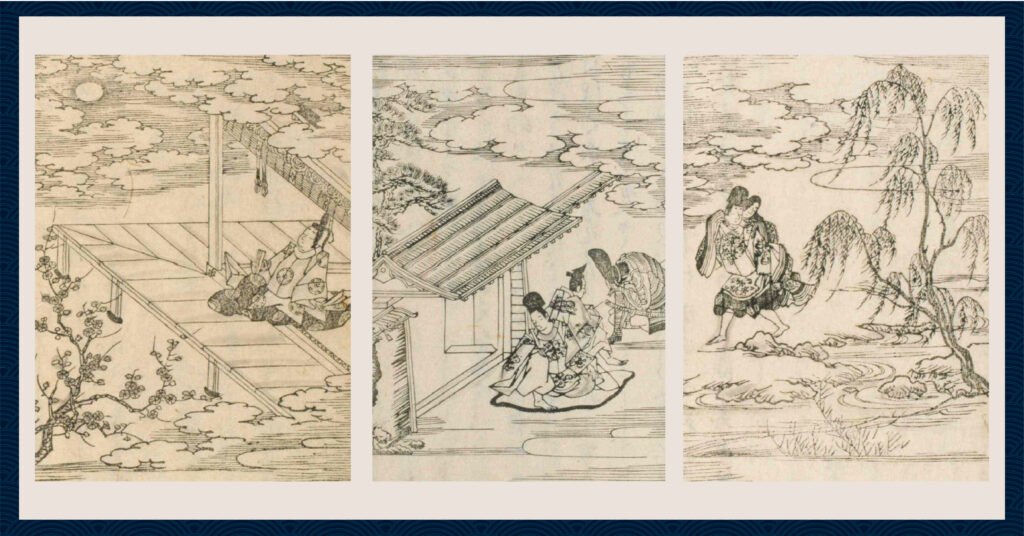
The appeal of “The Tales of Ise” extends beyond its literary merit. For centuries, the stories have inspired countless artists who visualized them in the form of Nara ehon (illustrated books) and emaki (picture scrolls). The emaki produced during the Edo period (1603-1868) are particularly remarkable for their meticulous brushwork and vibrant colors that brilliantly bring the world of Heian aristocracy to life.
The notable aspects of The Tales of Ise emaki include:
- The Aesthetic Fusion of Image and Text: The composition unites visual expression with textual narrative (kotobagaki), allowing readers to experience literary emotion visually as well.
- Visual Documentation of Heian Culture: As historical documents, these works provide concrete depictions of Japanese nobility culture through illustrations of aristocratic residences, formal attire, furnishings, and landscapes.
- Mastery of Color and Composition: The use of luxurious pigments including gold dust, ultramarine, and vermilion, combined with the unique “fukinuki yatai” (blown-off roof) technique that simultaneously reveals both interior and exterior spaces.
- Subtle Expression of Emotion: The technical skill in depicting facial expressions, gestures, and natural settings visually communicates the delicate emotions embedded in the waka poems.
These emaki developed not merely as illustrations but as a uniquely Japanese form of comprehensive art where literature and painting merge seamlessly. Even today, their aesthetic sensibilities continue to inspire designers and artists worldwide.
A Cultural Heritage Recognized Globally – Precious Resources Now Freely Accessible
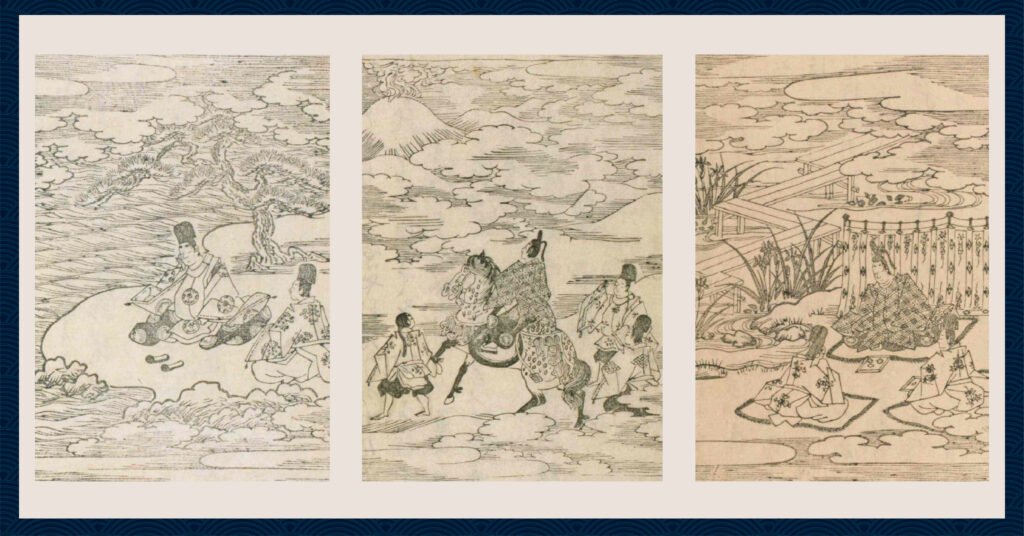
Today, scrolls and illustrated books of The Tales of Ise are preserved in world-class museums and libraries, many of which have been digitized. High-resolution digital images can be freely downloaded from the following two institutions:
1. Library of Congress Collection
This collection features the earliest printed edition of The Tales of Ise, which can be downloaded in its entirety. This valuable edition involved the renowned artist Hon’ami Kōetsu (1558-1637) and the wealthy merchant-calligrapher Suminokura Soan (1571-1617) from the Kyoto-Saga region. The beautiful book features flowing calligraphy on papers of various colors, decorated with shell pigment. Printed using early movable type and illustrated with woodblock prints, it represents the height of Japanese bookmaking artistry.
For Western readers unfamiliar with Hon’ami Kōetsu, he was one of Japan’s most celebrated artists and craftsmen, often described as a “renaissance man” who excelled in calligraphy, pottery, lacquerwork, and garden design. His artistic collaborations helped establish a new aesthetic that influenced Japanese arts for centuries.
2. The Metropolitan Museum Collection
The Metropolitan Museum’s collection showcases exquisite miniatures created in the Tosa school tradition, a painting style closely associated with the imperial court and Japanese nobility culture. The set features 49 jewel-like illustrations rendered in brilliant mineral pigments and framed with stylized cloud shapes sprinkled with gold foil. This three-volume set would have once been an important part of a bridal trousseau, proudly possessed by upper-class families. Each individual image can be viewed and downloaded in high resolution.
The Tosa school, which may be unfamiliar to Western audiences, was an influential Japanese painting tradition that specialized in yamato-e (classical Japanese painting style) and was particularly known for its small-scale, narrative handscrolls depicting court life and literary classics with meticulous detail and brilliant colors.
The Essence of Heian Culture in the Modern Age
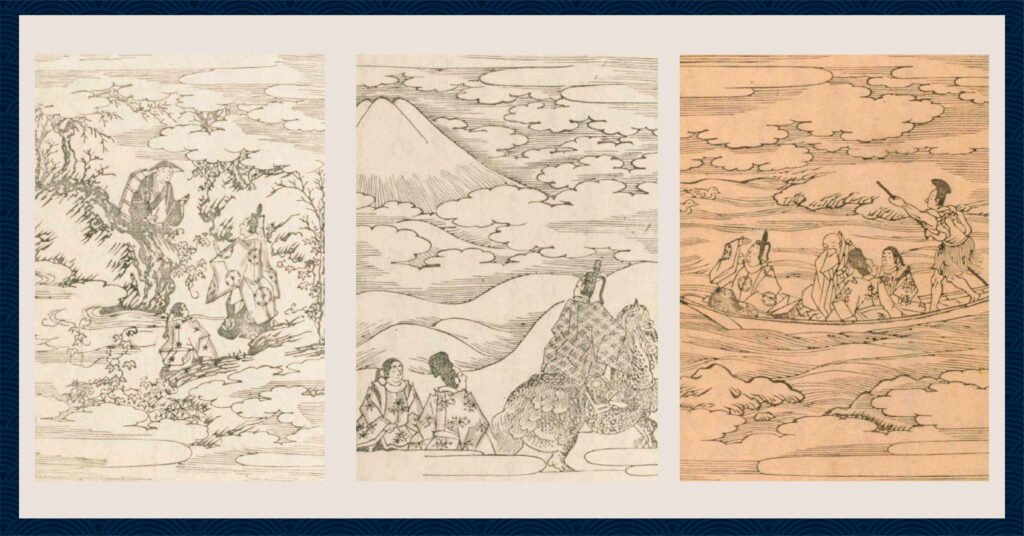
“The Tales of Ise” possesses a timeless appeal that continues to resonate with readers more than a millennium after its creation. The romantic sensibilities, harmonious coexistence with nature, and refined aesthetics portrayed in the tales remain vibrant aspects of Japanese cultural identity, underpinning the fundamental aesthetic consciousness that has been continuously passed down through generations.
The digitized Tales of Ise emaki serve as invaluable resources not only for scholars but also for designers, illustrators, and cultural creators looking to learn from and incorporate traditional Japanese aesthetics into their work. The fact that these treasures, once accessible only to a privileged few, can now reach people around the world through digital technology represents a new possibility for cultural preservation and transmission.
The aesthetic sensibilities and refined emotions depicted in “The Tales of Ise” represent aspects of Japanese nobility culture that deserve recognition and preservation, especially in our increasingly globalized world. These works highlight the uniqueness of Japanese culture that should be passed on to future generations. Through these freely accessible resources, everyone can now experience the essence of Japanese nobility culture that flourished over a thousand years ago.
For those interested in Japanese classical literature, art history, or cultural studies, exploring these digitized emaki offers an unparalleled window into the sophisticated world of Heian period Japanese nobility culture, where poetry, aesthetics, and emotional refinement reached extraordinary heights of expression that continue to influence Japanese arts and sensibilities to this day.
Whether you’re a scholar, artist, designer, or simply a lover of beautiful things, these digital treasures provide an opportunity to connect with the aesthetic principles of Japanese nobility culture that have shaped one of the world’s most distinctive artistic traditions.
Explore More Free Downloadable Resources
If you’re interested in discovering more freely downloadable historical Japanese art resources for your creative projects, click the banner below. Our curated collection includes additional ukiyo-e prints, kimono pattern books, and rare illustrated manuscripts that offer authentic glimpses into Japan’s artistic heritage. Continue your journey through the floating world and beyond with these carefully selected visual treasures from Japan’s golden age of woodblock printing.
