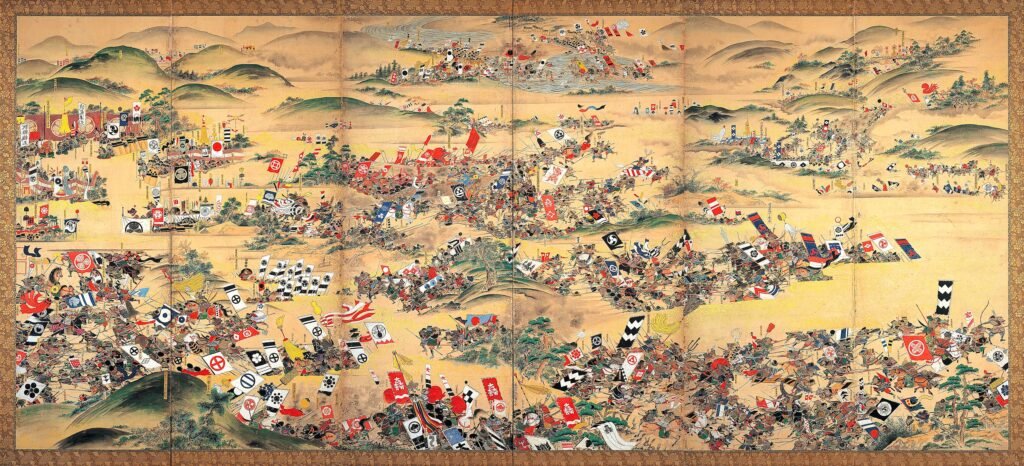
Japanese family crests, known as “kamon” or simply “mon,” represent a unique heraldic system unparalleled in their refinement and symbolism. Emerging in the late Heian period (around the 12th century) within samurai society, Japanese family crest initially served the practical purpose of identifying allies on the battlefield. During the Kamakura and Muromachi periods, they evolved into symbols representing family lineage and bloodlines.
The culture of Japanese family crests reached its zenith during the Edo period (1603-1868), when not only samurai but also merchants and farmers began adopting their own family emblems. Contemporary directories of samurai, such as “Oiekagami” and “Bukan,” invariably included the Japanese family crest of each house.
Japanese family crests are not merely identification marks, but symbols of family pride and history, with their designs encapsulating Japanese aesthetics and perception of nature. This understanding articulates how Japanese family crest transcend mere design excellence to embody profound cultural and social significance that remains relevant today.
Basic Structure and Classification of Japanese Family Crests
Fundamental Forms
Japanese family crests typically feature a circular “maru-mon” (round crest) as their foundation. This circle symbolizes the cosmos and harmony while offering practical utility as a seal. Traditionally rendered in monochrome (actually the contrast between fabric and dye, or carving and background), these emblems achieve a refined abstraction through this limitation.
The design principles of Japanese family crest include:
- Bilateral symmetry: Most Japanese family crests display perfect left-right symmetry
- Simplification and stylization: Natural elements are highly abstracted
- Geometric composition: Circles and regular polygons form the structural foundation
- Aesthetic use of negative space: Careful balance between background and figure
Classification System
Japanese family crests are categorized according to their motifs:
- Plant crests: Cherry blossoms, plum, chrysanthemum, wisteria, apricot, paulownia, ivy, pine, etc.
- Animal crests: Cranes, butterflies, hawks, turtles, dragonflies, etc.
- Natural phenomena crests: Stars, moon, clouds, waves, mountains, etc.
- Man-made object crests: Arrows, bows, fans, wheels, drums, etc.
- Character crests: Stylized Chinese characters or Japanese hiragana
- Abstract crests: Tomoe (comma-like swirls), linked rings, nail-pullers, etc.
By applying “kawari-mon” techniques (variations) to these basic patterns, thousands of Japanese family crest emerged. “Kawari-mon” involves adding elements like rings or dots to distinguish related crests while maintaining their fundamental design.
Notable Japanese Family Crests and Their Meanings
Imperial and Aristocratic Crests
- Chrysanthemum Crest (Jūroku-yae Omotegiku): The Imperial emblem featuring a 16-petaled chrysanthemum, symbolizing authority and nobility. Its use by ordinary citizens remains prohibited.
- Paulownia Crest (Go-shichi no Kiri): Famous as the crest of the Toyotomi family, this design incorporates stylized paulownia leaves arranged in a pattern of three and five leaves. Today, it serves as the emblem of the Japanese Cabinet.
Famous Samurai Family Crests
- Triple Hollyhock (Mitsuba Aoi): The Tokugawa family crest combines three hollyhock leaves in a simple yet powerful design that represented supreme authority during the Edo period.
- Genji Wheel (Genji Guruma): The crest of the Genji clan features a wagon wheel motif, said to symbolize expansion and development. Many Genji descendants adopted variations of this crest.
- Circle with Sword Guard (Maru ni Ken Kamishimo): The Date family crest depicts a stylized sword guard (tsuba), representing samurai spirit.
- Takeda Diamond (Takeda Bishi): The Takeda family crest combines four diamond shapes in a simple yet powerful design.
Design Characteristics of Japanese Family Crests
Japanese family crest has garnered high praise from graphic designers worldwide for their refined aesthetics. Particularly noteworthy features include:
- Visibility and Universality
Japanese family crest was designed for instant recognition even from a distance, reflecting their original purpose. This necessitated a “subtractive design” aesthetic that removes unnecessary ornamentation to preserve only essential characteristics. - Geometric Precision
Many Japanese family crests feature geometric structures based on circles, incorporating golden ratios and specific angular placements. For example, the “mitsu-domoe” (triple comma) consists of three spirals placed at 120-degree intervals, demonstrating perfect rotational symmetry. - Abstraction of Nature
The Japanese family crest masterfully abstracts natural elements to capture their essence. For instance, the “Dakimyoga” crest reduces the myoga ginger plant to its essential form, while the “Kataguruma” crest stylizes a dove’s tail—both achieving remarkable representation through extreme simplification.
Japanese Family Crests in Contemporary Design
These ancient emblems continue to exert considerable influence on modern design disciplines.
- Corporate Logo Applications
Many Japanese corporations have adopted logo designs inspired by Japanese family crests. For example, Mitsubishi’s three diamonds derive from the “Mitsubishi” (three-tiered water chestnut) crest, while KIKKOMAN’s logo is based on the “Kikko ni Kanroku Boshi” crest (tortoiseshell with six stars). - Influence on Graphic Desige
The abstract yet symbolically powerful design approaches of Japanese family crests have significantly influenced contemporary graphic design, particularly logo and icon development. The principles of negative space, symmetry, and abstraction evident in Japanese family crests can be considered precursors to today’s flat design aesthetic. - Interior Design and Fashion
While Japanese family crests traditionally adorned the back and sleeves of kimono, they now appear decoratively in various contexts. In interior design, they may pattern shoji paper screens or fusuma sliding doors, while in fashion design, they express Japanese cultural identity.
The Contemporary Significance of Japanese Family Crests
In modern Japan, Japanese family crests continue to appear at significant life events including weddings, funerals, and on gravestones. Many Japanese citizens research their family crests in “kamon-cho” (family crest records) to reconnect with their heritage and affirm their identity.
The contemporary relevance of Japanese family crests has grown in recent years, as many seek connections to traditional cultural elements amid increasing globalization. These emblems serve as visual links to Japan’s rich cultural heritage and continue to inspire both traditional artisans and contemporary designers worldwide.
Conclusion: Japanese Family Crests as a Wellspring of Design Inspiration
Japanese family crests transcend their role as mere identification marks to become design systems of exceptional aesthetic value and cultural significance. Their refined abstraction, symbolism, and geometric precision make them forerunners of contemporary logo and icon design.
For designers, Japanese family crests offer concentrated inspiration drawn from Japanese aesthetic sensibilities. Learning and understanding the design principles behind traditional Japanese family crests can provide valuable insights for addressing modern design challenges.
The “subtractive aesthetics” and symbolism embodied in Japanese family crests may be more valuable than ever in our information-saturated age, representing a design philosophy worthy of renewed appreciation.
Note: Commercial use of certain Japanese family crests, such as the Imperial chrysanthemum, may be restricted. When utilizing crests associated with specific family lineages, it is advisable to approach them with appropriate respect.