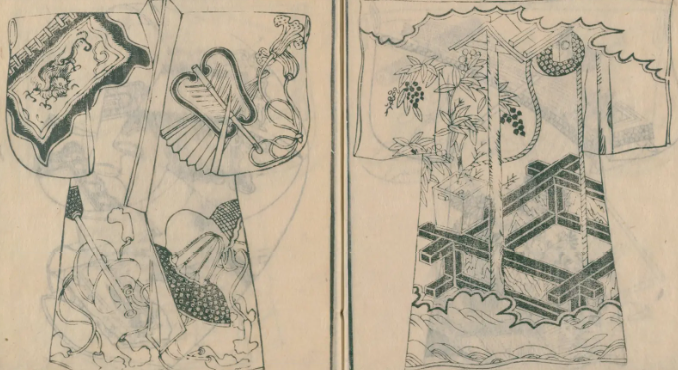
From anime character design to haute-couture look-books, the global creative scene has rediscovered the poetic minimalism and bold patterning of Edo Period Women Materials. Yet reliable, high-resolution sources were scarce—until the National Diet Library (NDL) placed the complete five-volume “Onna Yō Kinmō Zui” online for free, unrestricted use. If your project calls for authentic kimono motifs, kanzashi hairpins, or vintage skincare recipes, these Edo Period Women Materials are a one-stop gold mine.
What Is “Onna Yō Kinmō Zui”?
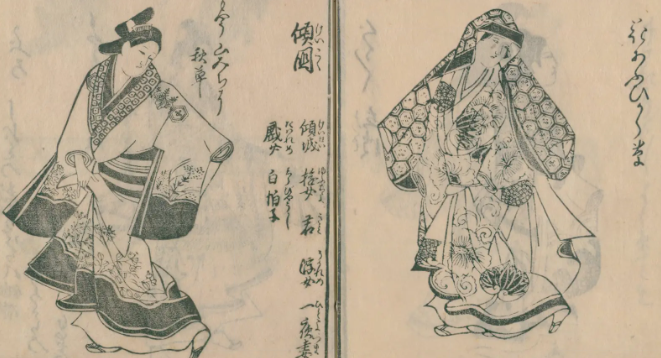
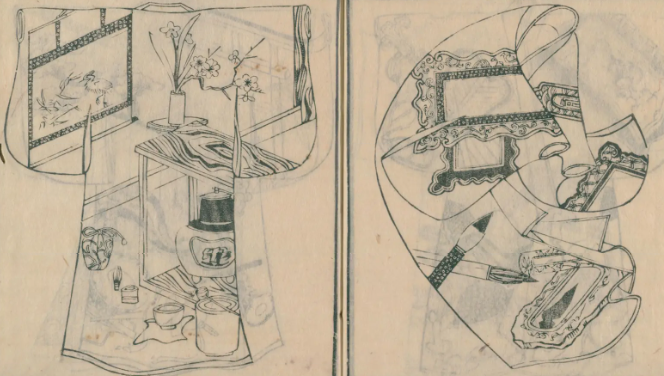
“Onna Yō Kinmō Zui” (lit. “Illustrated Primer for Women”) is a 17th-century spin-off of the best-selling “Kinmō Zui” encyclopedic series. Compiled by Okuda Shōhaku-ken, it focuses exclusively on the objects, fashions, and beauty practices of women in early Edo Japan (1603–1868). Each entry pairs concise prose with bold woodblock illustrations, making it an ideal visual dictionary of Edo Period Women Materials. Five separate scroll-format volumes cover:
- Clothing – kosode (short-sleeved kimono), furisode, courtly uchikake over-robes
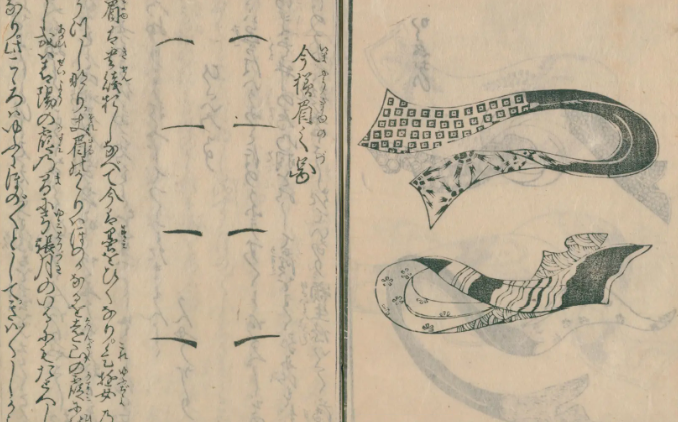
- Accessories – tortoiseshell combs, sculpted ivory kanzashi, foldable fans
- Cosmetics – white-lead face powder, safflower lipstick, loofah-water skin tonics
- Domestic tools – embroidery frames, writing boxes, incense burners
- Ceremonial items – tea utensils, incense sachets, chrysanthemum wine cups
Because the artwork was printed with thick, high-contrast lines, today’s designers can easily trace or vectorize these Edo Period Women Materials without losing historical fidelity.
Snapshot of Edo-Era Beauty & Dress for Non-Japanese Readers
To make the most of the Edo Period Women Materials, a bit of cultural context helps:
Kosode vs. Furisode
The kosode, ancestor of the modern kimono, was standard everyday wear. Unmarried women or those attending grand events chose the furisode, identifiable by sleeves that nearly graze the floor—a status symbol of youth and elegance.
White Powder & Rouge
Edo cosmetics revolved around the “three essentials”: oshiroi (white powder), beni (crimson rouge), and mayuzumi (charcoal eyebrow filler). Women often shaved their natural brows and repainted stylized arches—an aesthetic called hikimayu, visible in several Edo Period Women Materials plates.
Loofah Water
Known as hechima-sui, distilled loofah water functioned as a 17th-century toner, prized for cooling properties during humid summers—a fun fact you can spotlight when repurposing these Edo Period Women Materials for skincare branding.
Hair Architecture
Hairstyles signaled marital status: the voluminous shimada bun for maidens, the more reserved marumage for wives. Intricate kanzashi pins secured these coifs, and “Onna Yō Kinmō Zui” devotes entire spreads to their taxonomy, providing perfect Edo Period Women Materials for jewelers and illustrators alike.
How to Download the Edo Period Women Materials in Three Steps
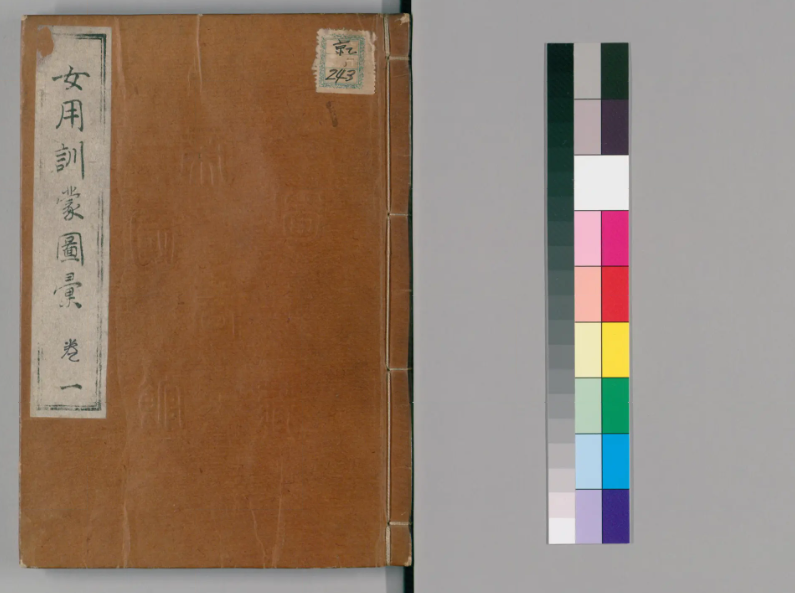
- Visit the master NDL page
- Switch the interface to English (top right), choose a volume (1–5), and click its thumbnail.
- In the viewer’s lower-right corner, hit “Download.” Select either individual pages or a ZIP bundle. Your fresh Edo Period Women Materials arrive in PNG or PDF at resolutions exceeding 3,000 px—suitable for print and 4K motion graphics.
The NDL marks this dataset as “Public Domain,” meaning the Edo Period Women Materials can be used, modified, or sold without licensing fees. Good practice suggests crediting “National Diet Library, Japan” plus the direct URL.
Numbers & Links at a Glance
- Volumes: 5 (Complete bundle link above)
- Total pages: 300+ illustrations
- Average page resolution: 3,000–3,500 px (long side)
- File formats: PDF, PNG, IIIF manifest for developers
- License: Public Domain (Japan + global)
Direct volume links—ideal for bookmarking specific Edo Period Women Materials:
- [Vol. 1] https://dl.ndl.go.jp/en/pid/2554828
- [Vol. 2] https://dl.ndl.go.jp/en/pid/2554829
- [Vol. 3] https://dl.ndl.go.jp/en/pid/2554830
- [Vol. 4] https://dl.ndl.go.jp/en/pid/2554831
- [Vol. 5] https://dl.ndl.go.jp/en/pid/2554832
Note: Volumes 2 and 5 contain more text than illustrations. For those primarily interested in the artwork, we recommend exploring volumes 1, 3, and 4.
Reviving Four-Centuries-Old Aesthetics
“Onna Yō Kinmō Zui” transforms dusty library stacks into a living toolkit for modern creators. From runway textiles to VR museums, Edo Period Women Materials offer timeless elegance and practical blueprinting in equal measure. Download, zoom, remix, and let Edo’s sophisticated femininity infuse your next project with historic depth and fresh allure.
Explore More Free Downloadable Resources
If you’re interested in discovering more freely downloadable historical Japanese art resources for your creative projects, click the banner below. Our curated collection includes additional ukiyo-e prints, kimono pattern books, and rare illustrated manuscripts that offer authentic glimpses into Japan’s artistic heritage. Continue your journey through the floating world and beyond with these carefully selected visual treasures from Japan’s golden age of woodblock printing.
