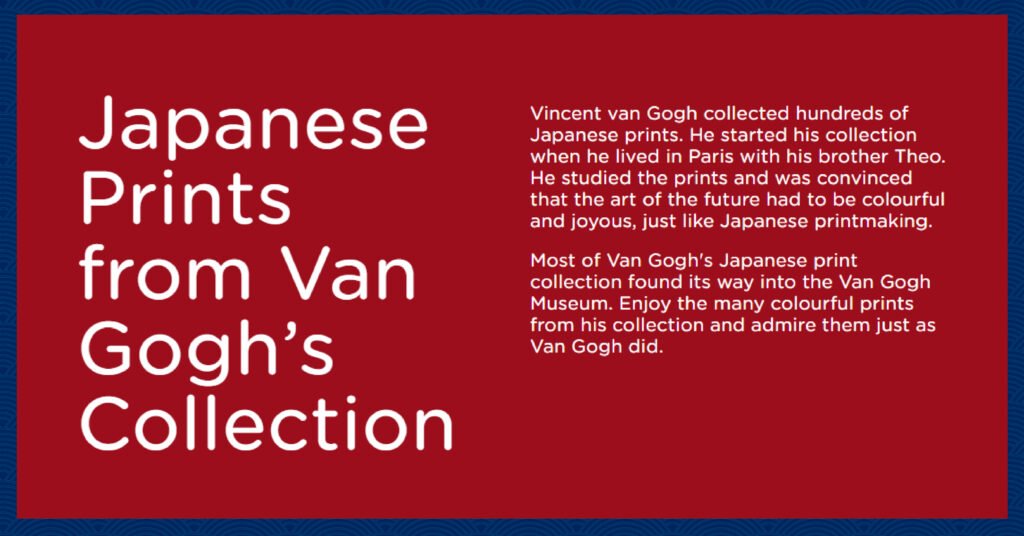
In the late 19th century, a wave of “Japonisme” swept through Western art circles, dramatically influencing European aesthetics. At the heart of this cultural exchange stood Vincent van Gogh (1853-1890), whose passionate collection of Japanese woodblock prints has now been completely digitized and made freely available by the Van Gogh Museum in Amsterdam. Titled “Van Gogh Collects: Japanese Prints,” this digital archive offers unprecedented access to the ukiyo-e masterpieces that captivated the Dutch painter’s imagination and transformed his artistic vision.
The Extensive Collection: Over 600 Treasures Unveiled
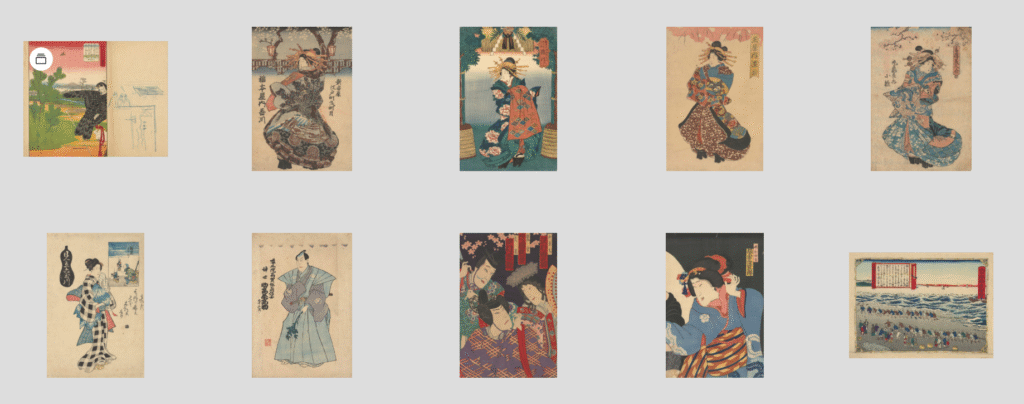
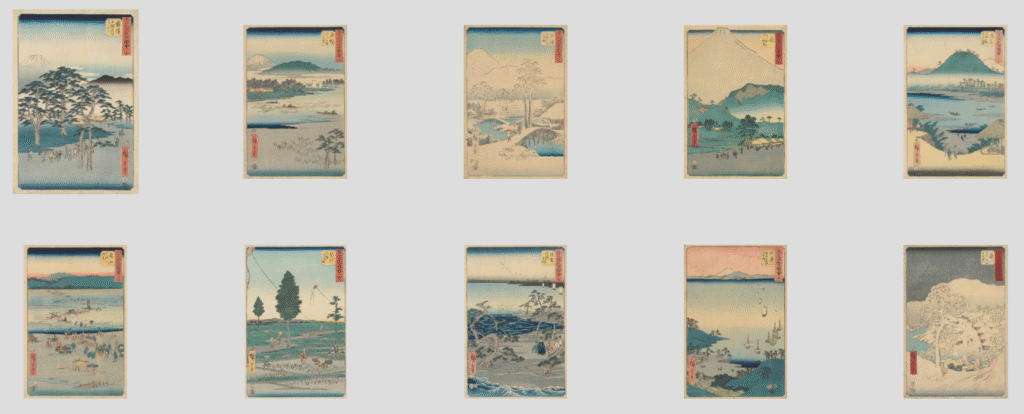
The Van Gogh Museum’s digital archive features more than 600 ukiyo-e prints that once belonged to Van Gogh’s personal collection. These historical treasures are now available in high-resolution format, free to download for researchers, designers, and art enthusiasts worldwide. The website offers convenient filtering options by artist and genre, with a fully functional Japanese-language interface that makes navigation seamless for Japanese users.
Historical accounts suggest that the attic of the art gallery run by Van Gogh’s brother Theo once housed thousands of Japanese prints. Unlike many collectors of his time who sought expensive, rare editions, Van Gogh preferred prints with vibrant colors and compelling subjects—an aesthetic preference that would profoundly influence his later paintings.
For Western readers unfamiliar with ukiyo-e, these “pictures of the floating world” emerged during Japan’s Edo period (1603-1868) and depicted scenes from everyday life, landscapes, theatrical performances, and folk tales. Printed using wooden blocks with water-based inks on handmade paper, these works revolutionized the concept of art reproduction centuries before modern printing technologies.
How Van Gogh’s Japanese Prints Transformed His Art
The influence of Van Gogh’s Japanese prints is perhaps most evident in his portrait “Père Tanguy,” where the background features several ukiyo-e prints that once adorned the walls of his studio. This visual testament demonstrates the Dutch artist’s deep appreciation for Eastern aesthetics.
The Van Gogh Museum’s website includes a fascinating section that analyzes how these Japanese artworks influenced the painter’s technique. Here, visitors can compare Van Gogh’s copies of ukiyo-e prints with their originals, gaining insight into how he absorbed and adapted Eastern artistic principles into his distinctive style.
Particularly noteworthy is Van Gogh’s copy of Utagawa Hiroshige’s “Plum Park in Kameido,” which Van Gogh reimagined as “Flowering Plum Tree (after Hiroshige).” While faithfully preserving the original composition, Van Gogh transformed the color palette to align with his own vibrant sensibilities. The bold compositions, flattened perspective, and strong outlines characteristic of ukiyo-e gradually became integral elements of Van Gogh’s unique artistic vocabulary.
Art historians have noted that Van Gogh’s Japanese prints provided him with alternative approaches to composition and color that liberated him from Western academic traditions. In his letters to his brother Theo, Van Gogh frequently expressed admiration for what he perceived as the Japanese artists’ ability to capture nature with economy and precision—qualities he strove to achieve in his own work.
Artistic Exchange Across Closed Borders
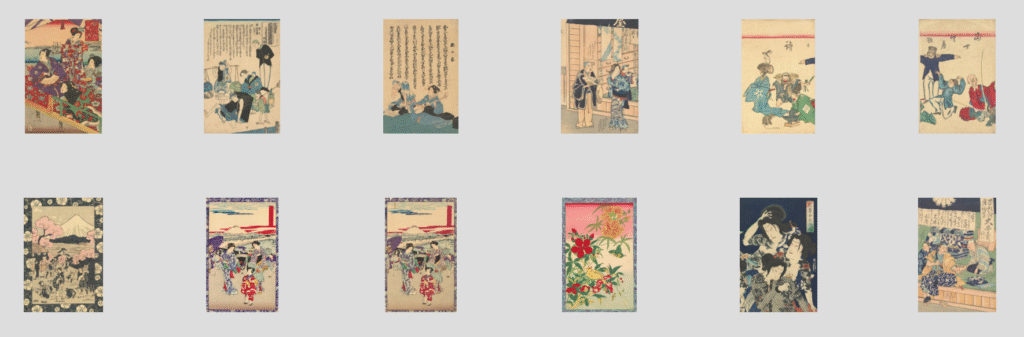
Although Japan maintained a strict isolation policy during most of the Edo period, ukiyo-e prints nevertheless found their way to Europe, creating a sensation among Impressionist and Post-Impressionist painters. The flat compositions, bold color schemes, and everyday subject matter of Van Gogh’s Japanese prints challenged Western artistic conventions of the time.
Interestingly, this cultural exchange worked both ways. By the late 19th century, Japanese printmakers were actively incorporating Western techniques such as linear perspective and shading into their works. Masters like Utagawa Hiroshige and Katsushika Hokusai produced later works that clearly show Western influences in their approach to depth and volume.
This cross-cultural artistic dialogue represents an early example of globalization in the arts, predating our contemporary interconnected creative world. Van Gogh’s Japanese prints collection thus stands not merely as an assemblage of beautiful objects but as evidence of a creative conversation between East and West.
The Van Gogh Museum: A Global Authority
The Van Gogh Museum in Amsterdam, established in 1973, houses the world’s largest collection of Vincent van Gogh’s artworks. Beyond Van Gogh’s paintings, the museum exhibits works by his contemporaries such as Paul Gauguin and Henri de Toulouse-Lautrec, alongside the Japanese prints that so deeply inspired him and copies he made of Jean-François Millet’s paintings.
The museum has established itself as the definitive authority on authenticating Van Gogh’s works. In Japan alone, the museum has authenticated significant pieces including “Sunflowers” at the SOMPO Museum of Art and “Peasant Woman” at the Woodone Museum of Art.
To support scholarly research, the Van Gogh Museum maintains a library with over 24,000 publications related to the artist. This extensive research infrastructure underpins high-quality academic initiatives like the digital archiving of Van Gogh’s Japanese prints.
The Significance of Digital Archives in Art Preservation
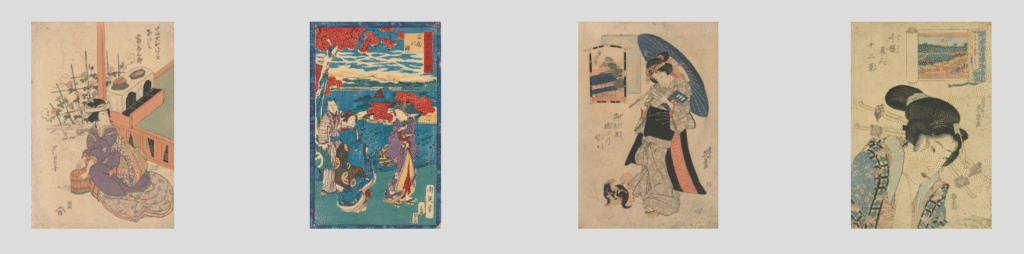
The digitization of Van Gogh’s Japanese prints represents a pivotal development in how we access and preserve art. Traditionally, museum collections could only be viewed by physical visitors, but high-resolution digitization has democratized access to these cultural treasures.
Woodblock prints like ukiyo-e are particularly well-suited for digital reproduction. Since these artworks were themselves created as multiples rather than unique pieces, digital versions retain much of their essential character. Additionally, digital preservation helps protect these delicate prints from the inevitable deterioration that comes with age, preserving their colors and details for future generations.
Such digital archives serve not only to democratize art appreciation but also provide invaluable resources for researchers and designers. For creative professionals seeking to incorporate traditional Japanese visual culture into contemporary designs, Van Gogh’s Japanese prints collection offers an inexhaustible source of inspiration.
Van Gogh’s Japanese Prints: Connecting Past and Present
The ukiyo-e prints that captivated Van Gogh continue to inspire creative minds today, more than a century after they catalyzed revolutionary artistic movements in 19th-century Europe. Through the Van Gogh Museum’s digital archive, these precious cultural artifacts transcend time and space to reach a global audience.
The clean compositions, bold colors, keen observation, and focus on everyday life that characterize ukiyo-e have clear parallels in contemporary graphic design and illustration. Through Van Gogh’s Japanese prints, we can reconnect with the essence of Japanese art and better understand its profound global impact.
Van Gogh once wrote to his brother: “All my work is based to some extent on Japanese art.” This statement underscores how deeply Van Gogh’s Japanese prints influenced not just his individual work but, through him, the broader trajectory of Western art. The collection that once inspired one of history’s most celebrated painters is now accessible to everyone.
Whether you’re an art historian researching Japonisme, a designer seeking visual inspiration, or simply curious about the cross-cultural exchange that helped shape modern art, exploring Van Gogh’s Japanese prints offers a unique window into an artistic relationship that changed the course of art history.
Through this remarkable digital initiative, the Van Gogh Museum invites us to see these works through Van Gogh’s eyes and rediscover the beauty that so captivated him. In making Van Gogh’s Japanese prints freely available online, the museum ensures that these cultural treasures continue to inspire creativity and cross-cultural understanding in our digital age.
Explore More Free Downloadable Resources
If you’re interested in discovering more freely downloadable historical Japanese art resources for your creative projects, click the banner below. Our curated collection includes additional ukiyo-e prints, kimono pattern books, and rare illustrated manuscripts that offer authentic glimpses into Japan’s artistic heritage. Continue your journey through the floating world and beyond with these carefully selected visual treasures from Japan’s golden age of woodblock printing.
